
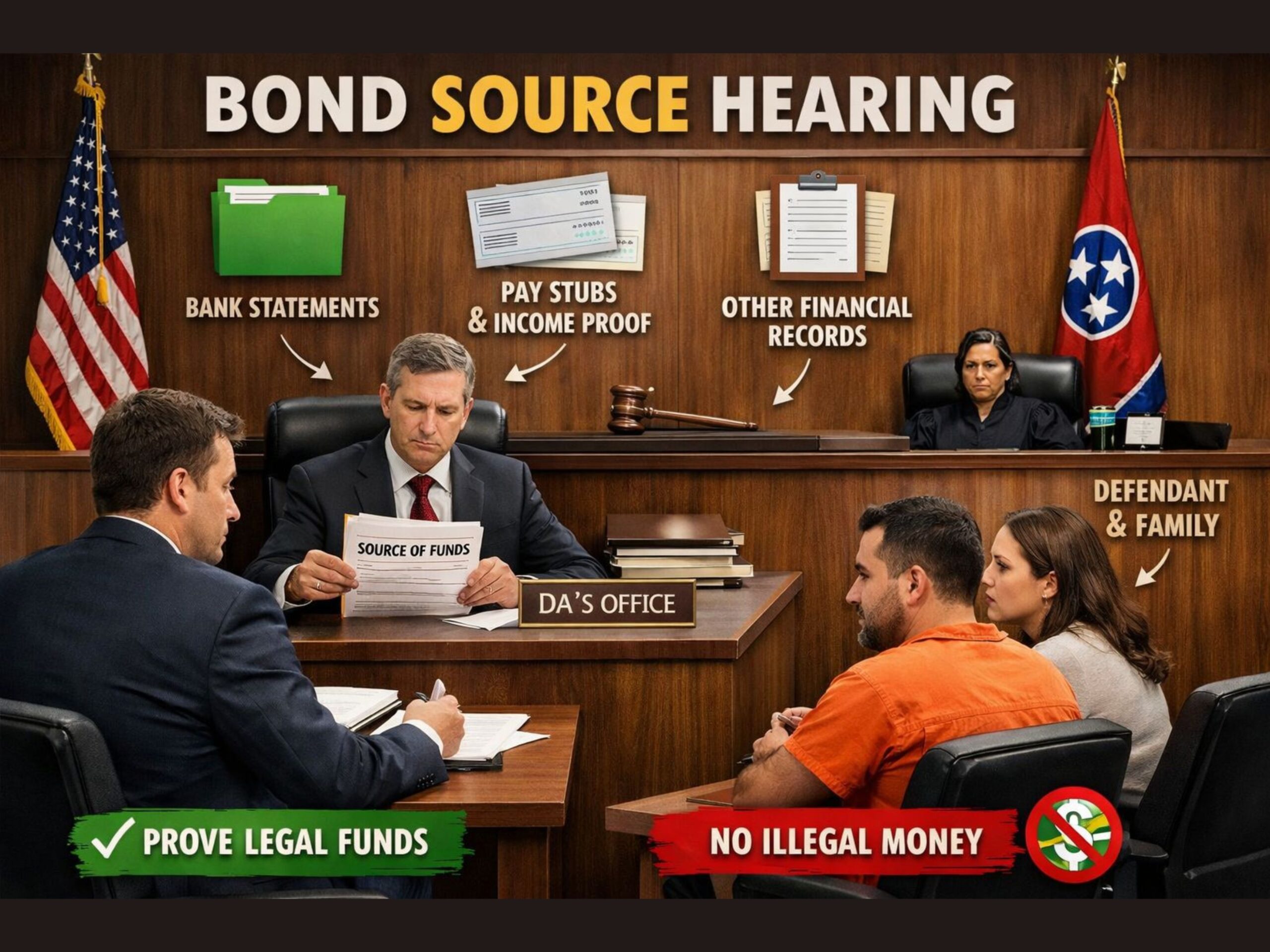
When a loved one is arrested in Tennessee, the first priority is usually getting them out of jail. Most people understand bond, but far fewer understand bond source hearings, which can stop a release even when the money is ready.
While bond source hearings are not common in simple DUI cases, they are very common in drug cases, and especially cases involving DUI combined with serious drug charges.
Understanding the Process
A bond source hearing is used to determine where the bond money came from and whether that money is legally obtained.
Tennessee courts and prosecutors want to ensure that illegal funds, such as drug proceeds, are not being used to secure a defendant's release.
If the source is not approved, the defendant stays in jail, regardless of the bond amount.
A Real Example
Recently, I represented a client facing DUI and major drug charges. Bond was set at $85,000.
Even though the family had the money ready, the client could not bond out until the source of funds was approved.
The Assistant District Attorney made it clear exactly what was required, and this is where many families get stuck if they do not have experienced help.
Required Documentation
To approve the bond source, the DA requested the following:
A source affidavit from the person paying the bond, clearly stating who they are, their relationship to the defendant, their employment information, and a statement that the money will not be paid back by anyone for posting the bond. This is a critical requirement. The affidavit must also include three months of bank statements. Any large deposits must be explained and verified.
A letter of good standing from the bonding company is also required. This confirms the bonding company is legally authorized to operate in Tennessee and confirms they agree to write the bond once the source is approved.
Finally, a certified check must come from the same bank account shown in the statements and must be made payable to the same bonding company.
If Approval Is Denied
If the prosecutor refuses to approve the bond source, the defense can file a motion and request a formal bond source hearing before a judge. At that point, evidence is presented, arguments are made, and the judge decides whether the source is lawful.
Why This Matters
Keeping someone in jail does not just affect their freedom. It affects their case. When someone remains incarcerated, they feel pressure to just take a deal. They struggle to help with their defense. Families feel desperate and overwhelmed.
Getting a client out on bond allows them to think clearly, work with their lawyer, support their family, and make informed decisions rather than rushed ones.
Final Thoughts
Understanding what prosecutors require and how to present bond source documentation properly can mean the difference between remaining incarcerated and securing release. The specific requirements outlined by the Assistant District Attorney in Tennessee are not suggestions. They are mandatory elements that must be provided in the exact format requested.
When families attempt to navigate this process without experienced legal guidance, critical documentation is often incomplete or improperly formatted, leading to unnecessary delays and prolonged incarceration. Having an attorney who knows exactly what prosecutors expect ensures that the bond source approval process moves forward efficiently.
If you or someone you love needs a bond source hearing in Tennessee, reach out before mistakes delay a release.